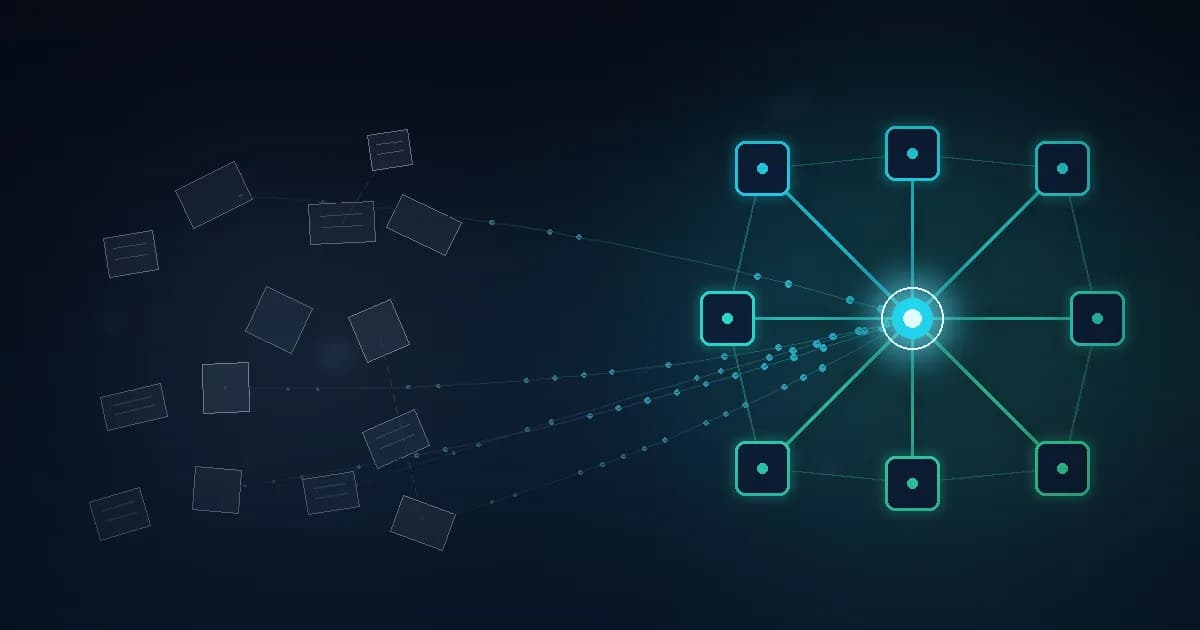
Still Running Your Company on Spreadsheets? 5 Signs It's Time for Custom Software
Almost every growing company passes through the same chapter: things start with a spreadsheet. Then a second one gets created, then a third. Before long, orders live in one program, customers in another file, inventory in a third place — and the team spends half the day stitching the pieces together. At some point, the tools stop carrying the business; the business starts carrying the tools.
That's exactly where custom software comes in. But it would be wrong to say every company should rush into it — it's a serious investment, and it should be made at the right time. In this piece, we'll cover the signs that the time has come, the real difference between off-the-shelf and custom, and what a well-run software project actually looks like.
First, let's untangle the acronyms
Don't let the abbreviations confuse you — they all solve different faces of the same problem:
- CRM is the memory of your customer relationships: who called when, which quote was sent, what stage each deal is in — no customer or opportunity slips through the cracks.
- ERP brings the company's internal operations under one roof: inventory, orders, production, and finance all see each other, and the same data never has to be entered twice.
- A B2B portal lets your dealers and business customers reach you through their own screen instead of your phone line: they see their own pricing, place their own orders, and track their own status. The common thread: all of them turn knowledge that lives in people's heads and scattered files into the company's system.
5 signs the time has come
1. The same data is entered by hand in more than one place. The order goes into one program, the invoice into another, the stock adjustment into a third spreadsheet. Every duplicate entry is both wasted time and a source of error. When two systems show different numbers, which one do you trust?
2. Knowledge lives in people's heads. If "only Mike knows how that works" is a sentence you hear often, your company's memory is stored in your employees' recollection. When that person goes on leave — or leaves for good — the knowledge goes too. A system makes knowledge independent of any one person.
3. Answering a simple question takes hours. If "what did each product sell this month?" or "which customers are overdue?" can only be answered by merging three spreadsheets, your decisions are delayed at exactly that speed. In the right system, those answers are one screen away.
4. Off-the-shelf tools don't match how you work. If you're bending your own processes to fit a package's mold — or half the package never touches your business at all — the tool isn't serving you; you're serving the tool.
5. Growth doesn't scale, it just multiplies effort. If every new customer or order proportionally requires another hire and more overtime, your processes don't scale. This is where software earns its keep: the business grows, and the operation runs with the same team.
Off-the-shelf or custom?
The honest answer: not always custom. If your processes are standard and a ready-made product covers most of your needs, off-the-shelf is the faster, more economical way to start.
Where custom software pays off is in the processes that set your business apart. If the way you work — your pricing logic, your dealer structure, your production flow — is what differentiates you from competitors, forcing it into a generic mold sands down your competitive edge. Custom software shapes itself around your business: it stays lean, speaks your language, and grows with the company. And while per-user monthly license fees for packaged tools stack up over the years, custom software is an asset you own.
A practical rule of thumb: off-the-shelf for the standard parts, custom for the parts that make you you. For most companies the right answer is a smart combination of both — and a good software partner is the one who doesn't sell you what you don't need.
What a good custom software project looks like
Bad software projects share one trait: they start with code. Good ones start with listening:
- Analysis. First, your business is understood: the processes, the bottlenecks, who needs what. Skip this stage and you get a product that's technically flawless — and useless.
- Scope and prioritization. Instead of building everything at once, the core that produces the most value is identified. Starting small and growing through validation reduces both risk and cost.
- Iterative development. Progress is measured in working versions, not screenshots; the software gets refined as you actually use it.
- Rollout and training. Software creates value only when the team truly uses it. A transition plan and training aren't decoration — they're part of the project.
- Continuous evolution. Your business changes; your software must be able to change with it. The healthy relationship is the one that begins at delivery, not the one that ends there.
The takeaway
Custom software isn't a technology indulgence; it's an efficiency and scaling decision. Done at the right time and with the right scope, it turns scattered spreadsheets into a single system, person-dependent knowledge into institutional memory, and a hand-cranked operation into one that scales.
At Softxware, we listen to your business first — the code comes later. And if we look at your processes and conclude you don't need custom software, we'll tell you that plainly, too. If you'd like to talk through your operation, one short conversation is all it takes.